Youth Will Fly: Why Montreal Is the Best City in the World to Be Young and Creative Right Now
You can't really make this argument in winter. In January, when the wind off the Saint Lawrence hits your face at Berri-UQAM and the city feels like it's trying to push you out, "best city in the world to be young and creative" sounds like something printed on a tote bag.
But it's June. And in summer, Montreal just shows you.
What the City Gives You
Growing up here means growing up with access to things most cities charge money for or put far away. In Montreal, the culture lands on the streets you already walk.
Jazz Fest runs June 25–July 4, and most of it is free. You can stumble into a world-class concert on your way home from the metro at 11pm, no ticket, no plan. That's not nothing. That's a generation of kids getting exposed to music they'd never have sought out and then carrying it for the rest of their lives.
MURAL Festival shut down Saint-Laurent for eleven days and handed it to artists. Free. Osheaga brings Twenty One Pilots, Lorde, Turnstile, Clipse, The xx, and about a hundred others to Île Sainte-Hélène for a long weekend at the end of July. MUTEK runs August 25–30 in the Quartier des Spectacles, six nights of electronic music and digital art that takes the genre seriously in a way most festivals in much larger cities don't bother to. Piknic Électronik has been running every Sunday on the island since May. ÎleSoniq follows in August.
Six festivals. One summer. Most of the outdoor programming free or close to it.
If you're trying to build an aesthetic, figure out what good music feels like in a room, or understand what your own creative work could eventually be, there's no better city to be doing that work in right now.
Why Here and Not Somewhere Else
Other cities have festivals. Montreal has something harder to manufacture: a lot of people making real work in a city that's still cheap enough to live in while you're figuring it out.
Toronto has more industry. New York has more money. London has the history. Paris has the mythology. Montreal has a creative class that can't fully afford to leave yet, and so they stay and build something here instead.
That's not a cynical read on it. It's just how creative cities work. The interesting ones are usually the ones that haven't fully gentrified, because the work that matters tends to come from actual friction, not from neighborhoods where everyone's already comfortable and successful.
A kid from Rosemont-La Petite-Patrie can still afford a studio. A designer from Côte-des-Neiges can still afford a workshop. That matters more than any festival lineup.
Montreal is also bilingual in a way that doubles the cultural intake you grow up with, French-language media and English-language media running in parallel, not separate. The Caribbean and African diaspora communities that have been part of this city for generations add dimensions that don't exist the same way anywhere else in Canada. Haitian-Canadian Montreal specifically has produced a creative tradition across music, visual art, and literature that the broader culture is still catching up on.
Work that comes out of this city is hard to place cleanly. That's the advantage. Hard to place means hard to copy.
The People Actually Doing It
Most of the people doing the most interesting work in Montreal right now are in their twenties and thirties. They didn't wait for permission and didn't get much institutional support. So they built their own: collectives, independent releases, self-funded runs, documentation projects. The infrastructure they needed, they made.
That's where the real texture of the scene comes from. It's not polished the way scenes with major backing tend to be. There's more at stake in the work. You can feel it.
The question Montreal keeps asking this generation is whether it'll keep them. Toronto and New York pull at people once the work starts getting recognized. The city has a long track record of producing talent and watching it get claimed somewhere else.
But right now there are enough people here, doing enough real work, finding each other across enough different disciplines, that the pull to leave isn't as clean as it used to be. Whether that holds is an open question. It feels different than it did five years ago, though. Whether that holds is genuinely unclear. But it feels different than it did five years ago.
Why Blem Is a Montreal Brand and Not Anything Else
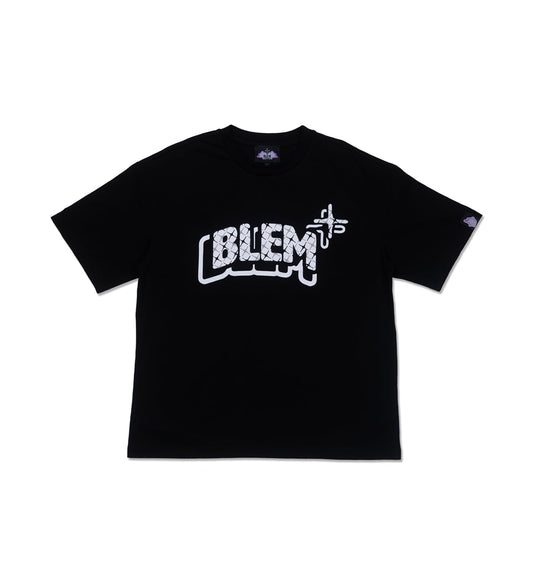
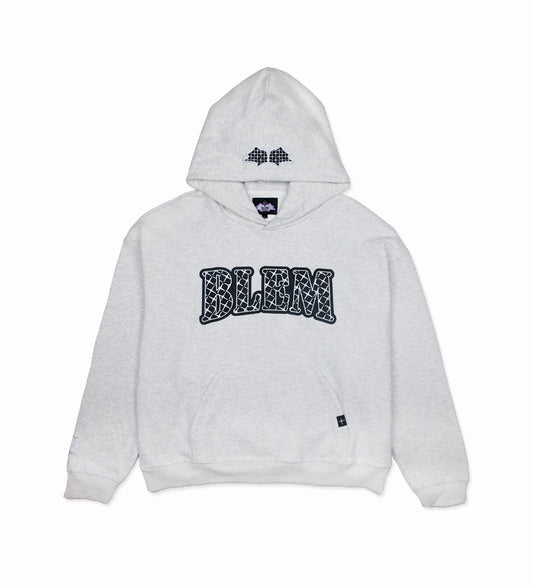
Blem wasn't built in New York. New York didn't make it. The brand is a Montreal product literally, made here, from this city's specific history, visual culture, and the particular feeling of growing up between multiple cultural identities with no clean name for the thing you are.
The wings, the stars, the graffiti roots in the design: none of that came from anywhere else. The philosophy (self-acceptance, creativity, freedom, the idea that imperfection aimed at something is worth more than polished emptiness) is inseparable from what it actually feels like to grow up here. To absorb French and Haitian and Caribbean and Montreal-specific references all at once. To never quite fit one clean category and eventually figure out that's not a disadvantage.
Montreal teaches that lesson to every generation that stays long enough to learn it.
Something Is Coming
The Resurrection campaign has been in the works. The film drops next week.
It's called Youth Will Fly.
It's about this city and this moment: what it means to build something in a place that doesn't always make room for you, and do it anyway.
Watch for it.
YOUTH WILL FLY. Something is coming.
Blem is a Montreal brand built on Haitian-Canadian heritage and the creative culture of this city. More at blem.ca